Welcome to Singapore!


Introduction
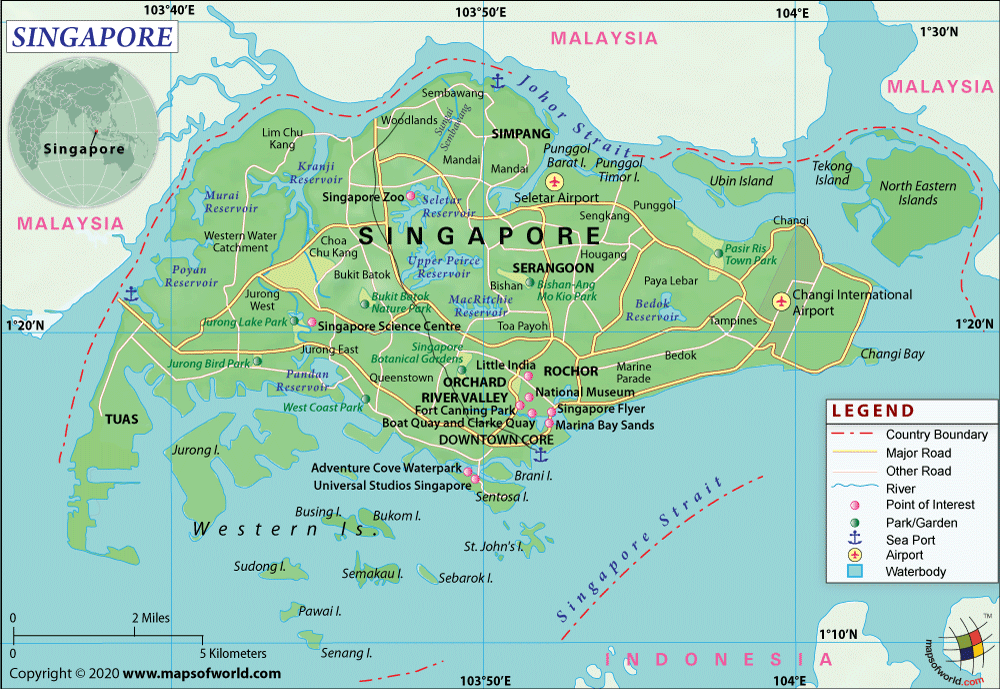
Located in Southeast Asia, Singapore is one of three surviving city-states in existence occupying 721 square kilometers of land south of Malaysia. Singapore is made up of the island of Singapore and over 60 smaller islands nearby. With a population of 5.8 million, Singapore is among the most densely populated countries in the world (Singapore Population, 2020). The primary ethnic categories making up the Singaporean population are Malaysian, Chinese, and Indian with other ethnic groups comprising the fourth largest category (Nations Online Project, 2020).
Singapore has a tropical climate and receives a significant amount of rainfall each year. The weather is consistently warm with a slight temperature increase in April and May, and slightly cooler months in December and January. Humidity typically stays between 70 and 90 percent all year (World Travel Guide, 2020).
With such limited surface area, Singapore lacks natural resources and relies heavily upon trade and commerce. Surrounded by abundant coastline and deep-water ports, their location offers them an economic advantage (InterNationsGo!, 2020). Once a British Colony, Singapore became part of the Federation of Malaysia in 1963 after WWII and was expelled in 1965 when it gained its independence as a republic (Council on Foreign Relations, 2020). Singapore is perceived as being among the least corrupt of political systems (Transparency.org, 2020).